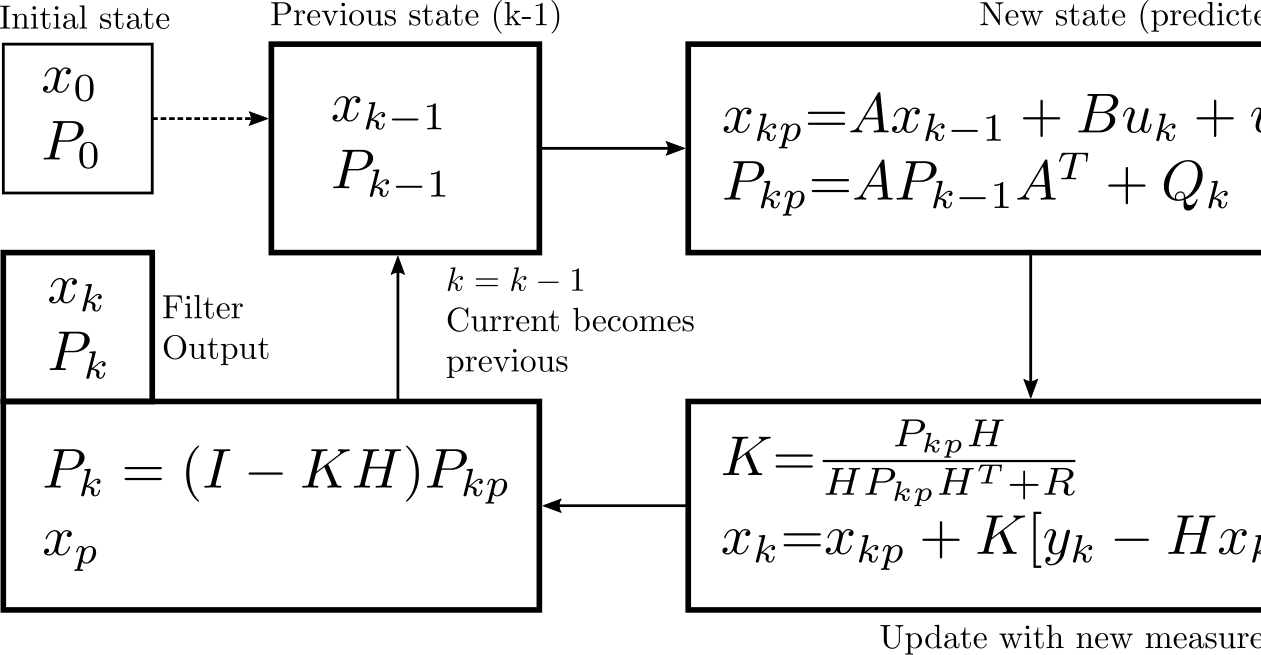
Kalman Filter for Robust Time Synchronization
Overview
High-precision time synchronization systems often rely on a single reference source, creating a potential point of failure when signal quality degrades or when erroneous timing information is introduced. This project investigated techniques for combining multiple independent timing references while maintaining the accuracy required for precision network synchronization.
A range of state estimation and control approaches were evaluated, including Linear Quadratic Regulator (LQR)–based methods and particle filtering. Following comparative analysis of accuracy, computational complexity, and fault tolerance, a Kalman filter–based architecture was selected as the most effective solution. The resulting design demonstrated the ability to preserve synchronization performance while improving resilience against unstable, degraded, or compromised timing sources.
Key Contributions:
- Research and development of a multi-reference time synchronization architecture
- Comparative evaluation of estimation and control techniques, including Kalman filtering, particle filtering, and LQR-based approaches
- Design of a robust timing fusion framework for combining multiple synchronization sources
- Preservation of IEEE 1588 PTP–level synchronization accuracy while increasing system resilience
- Scalable approach applicable to distributed, networked, and mission-critical timing systems